Antalya Travel Guide: A Journey Through History, Nature and Culture
Antalya is beyond beaches. Explore ancient cities, Mediterranean nature, local culture and hidden landscapes
Located on Türkiye’s Mediterranean coast, Antalya is often described as a beach destination. Yet beyond its turquoise shoreline lies a layered landscape shaped by ancient civilisations, dramatic mountains, fertile valleys, and a living local culture that continues to evolve.
This travel guide explores Antalya not as a resort city, but as a geographical, historical, and cultural crossroads — a destination where nature and humanity have been intertwined for thousands of years.
Where Is Antalya and Why It Matters
Antalya is situated in southern Türkiye, between the
Taurus Mountains and the Mediterranean Sea.
This unique location has made the region a natural gateway between Anatolia, the Levant, and the wider Mediterranean world.
Throughout history, Antalya has been:
- A strategic port city
- A cultural melting pot
- A fertile land attracting settlement, trade, and belief systems
Its geography alone explains why so many civilizations — Lycian, Pamphylian, Roman, Byzantine, Seljuk, and Ottoman — chose to leave their mark here.
A Brief History of Antalya
Human presence in Antalya dates back to prehistoric times, but the region flourished during antiquity. Antalya’s urban history formally begins in the 2nd century BCE, when the city was founded by King Attalos II Philadelphos of Pergamon and named Attaleia after him. Established as a strategic harbor city, Attaleia was designed to serve both as a naval base and a gateway for trade between the Mediterranean and the interior of Anatolia. Following the decline of the Pergamon Kingdom, the city was incorporated into the Roman Empire, marking the beginning of a period of significant urban development, monumental architecture, and regional importance that would define Antalya for centuries to come.
- Lycian & Pamphylian Periods: Independent city-states connected by trade routes and mountain paths
- Roman Era: The construction of theaters, aqueducts, roads, and monumental cities such as Perge, Aspendos, and Termessos
- Byzantine Period: A center of early Christianity and pilgrimage
- Seljuk & Ottoman Periods: Islamic architecture, caravan routes, and maritime trade
Rather than replacing one another, these cultures layered themselves — creating the complex identity Antalya carries today. This layered identity is clearly visible in Antalya’s urban fabric. Roman monuments such as Hadrian’s Gate were later integrated into Byzantine defensive systems, while Seljuk structures like the Yivli Minaret reused stones from earlier Roman and Byzantine buildings. Ancient cities such as Perge and Termessos reveal how pagan, Roman, and early Christian layers coexist rather than replace one another, creating a landscape where history remains readable across centuries.
Natural Landscapes of Antalya
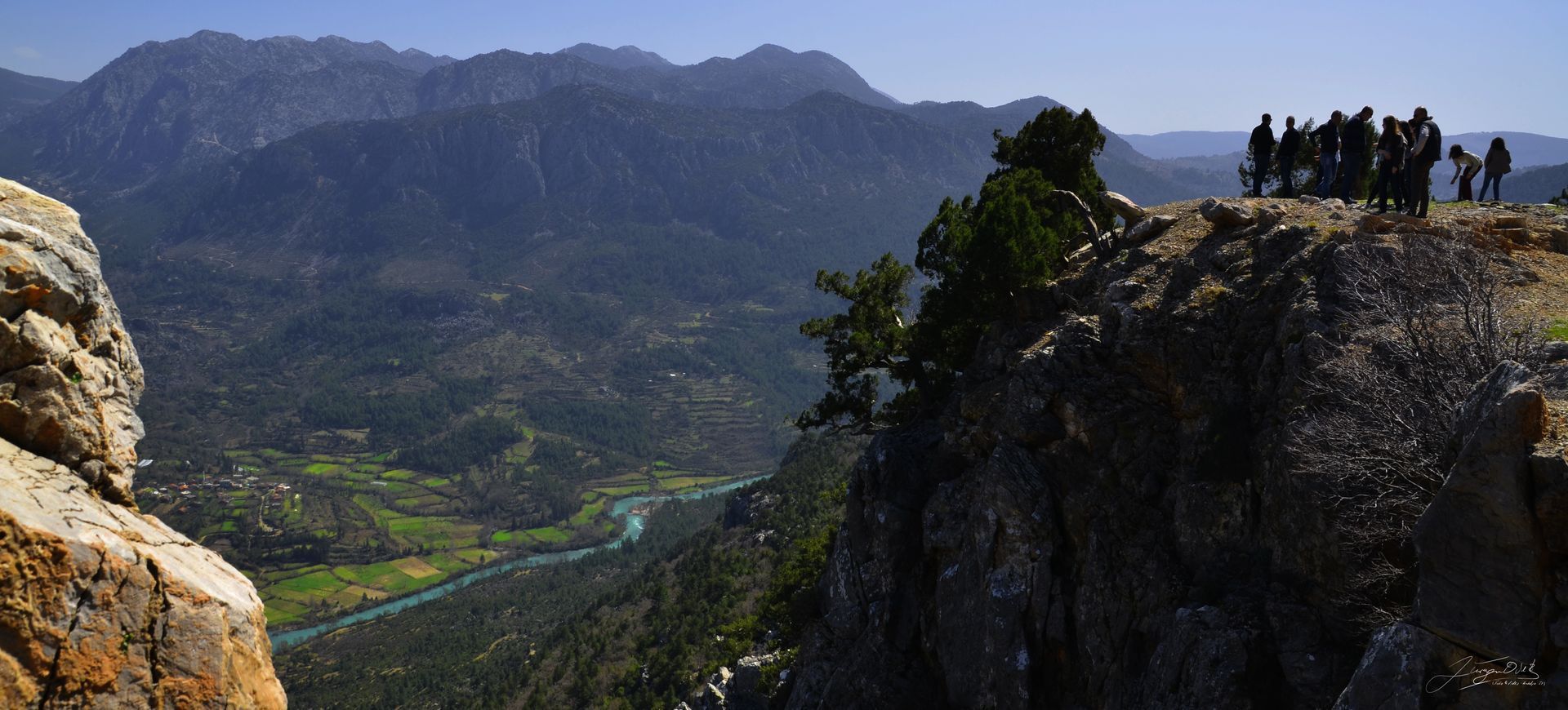
Antalya’s nature is defined by contrast.Within a short distance, the landscape shifts dramatically. Snow-capped peaks of the Taurus Mountains rise just behind sun-washed Mediterranean beaches, while deep limestone canyons carved by mountain rivers open into fertile plains and ancient valleys.
Mountains, Valleys and Plateaus
The Taurus Mountains rise sharply behind the coast, forming deep canyons, pine forests, and highland plateaus where traditional village life still exists.
Rivers and Canyons
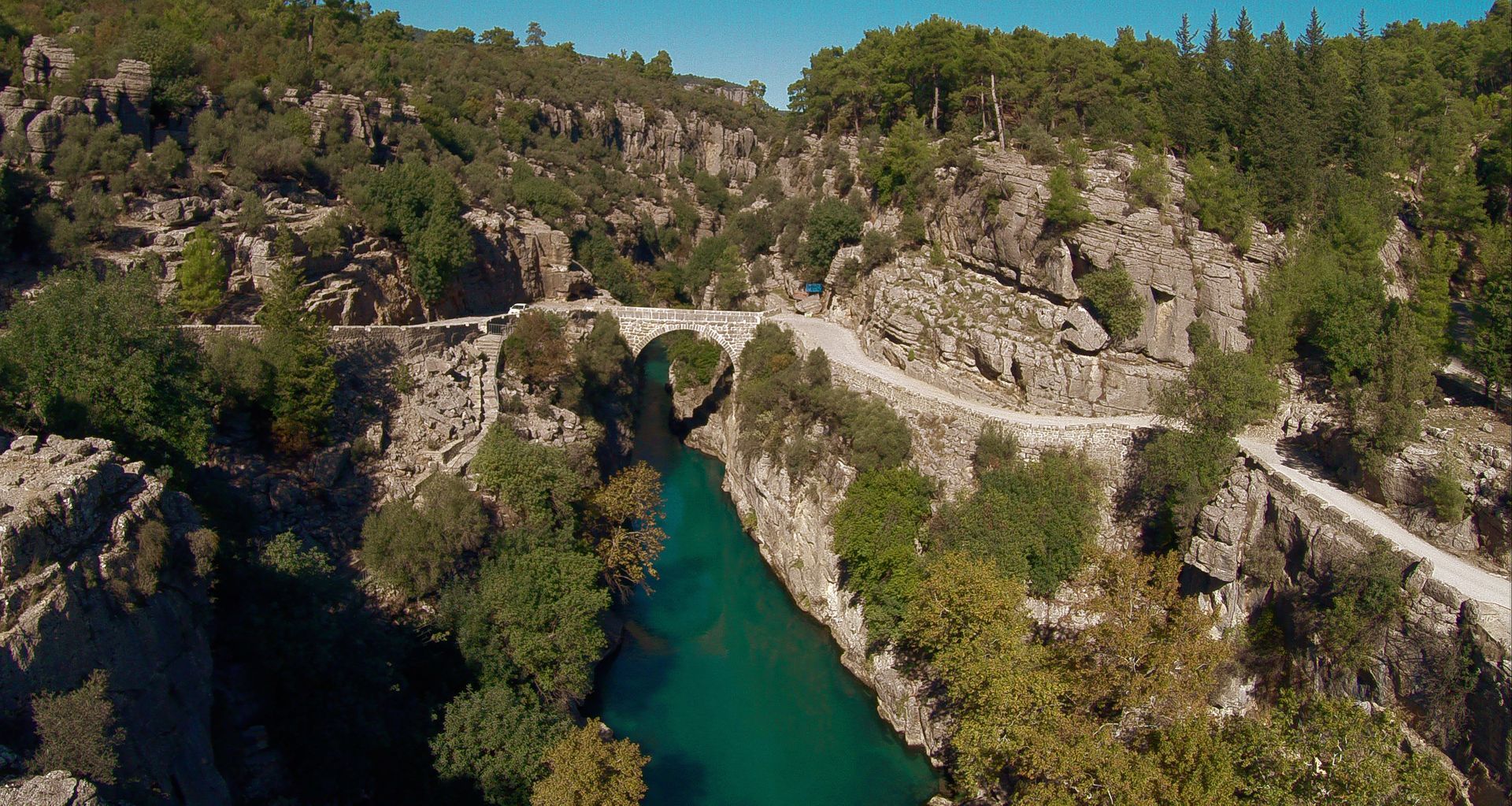
Rivers flowing from the mountains have carved dramatic landscapes such as:
- Köprülü Canyon
- Hidden limestone valleys
- Freshwater springs meeting the sea
Mediterranean Coastline
From long sandy beaches to rocky coves and cliffs, the coastline offers diverse ecosystems rather than a single coastal experience.
Nature in Antalya is not a backdrop — it is an active force shaping life, travel, and culture.
Ancient Cities and Archaeological Heritage.
Antalya is one of the richest regions in the Mediterranean in terms of archaeological density.
Perge
A former Roman capital with monumental streets, baths, and stadiums. Perge stands as one of the most complete examples of Roman urban planning in Anatolia. Monumental colonnaded streets, advanced water channels running through the city center, vast bath complexes, and a large stadium reveal a city designed not only for administration, but for daily civic life. Later additions, including early Christian basilicas, illustrate how Perge evolved over centuries without losing its original urban framework.
Aspendos
Home to one of the best-preserved Roman theaters in the world, still used for performances today. Aspendos is best known for its exceptionally well-preserved Roman theater, considered one of the finest surviving examples in the Mediterranean world. Built during the reign of Marcus Aurelius, the theater’s acoustics and structural integrity remain so strong that it continues to host performances today. Beyond the theater, aqueducts and civic structures highlight Aspendos’ role as a prosperous and technically advanced Roman city.
Termessos
A mountain city built in harmony with nature, inaccessible to large armies and largely untouched by modern development. Unlike most ancient cities, Termessos was built high in the Taurus Mountains, integrated directly into a rugged natural landscape. Its strategic location allowed it to resist conquest, including attempts by Alexander the Great. The city’s theater, temples, and civic buildings follow the natural contours of the mountains, making Termessos a rare example of an ancient city where architecture and wilderness exist in near-complete balance.
Traditional Life and Culture
Beyond history and nature, Antalya’s identity lives in its people.
Traditional Life
Local life in Antalya is deeply influenced by Yörük traditions, shaped by centuries of seasonal movement between the coast and the Taurus Mountains. This semi-nomadic way of life, based on herding, highland pastures, and self-sufficiency, has left lasting traces in daily routines, food practices, and social structures. Even today, the rhythm of life in many rural areas follows seasonal patterns rooted in ancient transhumance routes, where families still move to mountain plateaus during summer months, maintaining a relationship with the land that predates modern borders.
Beyond rural life, these traditions continue subtly in urban settings as well — in weekly markets, neighborhood gatherings, and shared meals. The emphasis on community, hospitality, and practical knowledge reflects a continuity of everyday habits passed down through generations, rather than a break between past and present.
Culture
Antalya’s cultural fabric is a continuation rather than a reinvention. Many customs observed today echo practices from ancient civilizations that once inhabited the region. Agricultural cycles, olive cultivation, viticulture, and the use of wild herbs follow patterns established during Roman and even earlier Hellenistic periods. Sacred landscapes, springs, and mountain sites once associated with ancient rituals continue to hold symbolic importance in local belief systems, transformed but not forgotten.
Yörük culture further enriched this continuity by blending mobility with tradition. Weaving patterns, woodwork, oral storytelling, and music carry motifs that reflect both Central Asian nomadic heritage and the Mediterranean world they adapted to. The result is a layered cultural identity where ancient Anatolian practices, classical Mediterranean influences, and nomadic traditions coexist — not as museum pieces, but as living elements of everyday life.
This sense of continuity can even be traced through everyday practices such as sport. In Aspendos, coins minted during the Roman period often featured wrestler figures, reflecting the importance of wrestling as a respected athletic discipline in the region. Far from being a forgotten tradition, wrestling has remained part of local life for centuries. Today, traditional oil wrestling festivals still take place across the same landscapes, linking modern communities with an ancient sporting culture that once filled Roman stadiums and theaters. This enduring presence illustrates how certain customs in Antalya have survived not through preservation alone, but through continuous practice.
Things to Do in Antalya (Beyond Mass Tourism)
Antalya offers far more than standard itineraries.
- Walking ancient paths between mountain cities
- Exploring lesser-known archaeological sites
- Hiking through hidden valleys and canyons
- Visiting highland villages and local producers
- Experiencing cultural storytelling rooted in place
These experiences reveal Antalya not as a product, but as a living landscape.
Best Time to Visit Antalya
- Spring (March–May): Ideal for hiking, culture, and mild weather
- Summer (June–September): Best for coastal experiences, but hot inland
- Autumn (October–November): Balanced climate, fewer crowds
- Winter (December–February): Quiet, cultural, and nature-focused travel
Each season offers a different perspective on the region.
Blog