Köprülü Canyon National Park: Where Nature, History and Water Shape the Land
Explore Köprülü Canyon National Park near Antalya. Discover Tazı Canyon, Selge Ancient City, Oluk Bridge and local life.
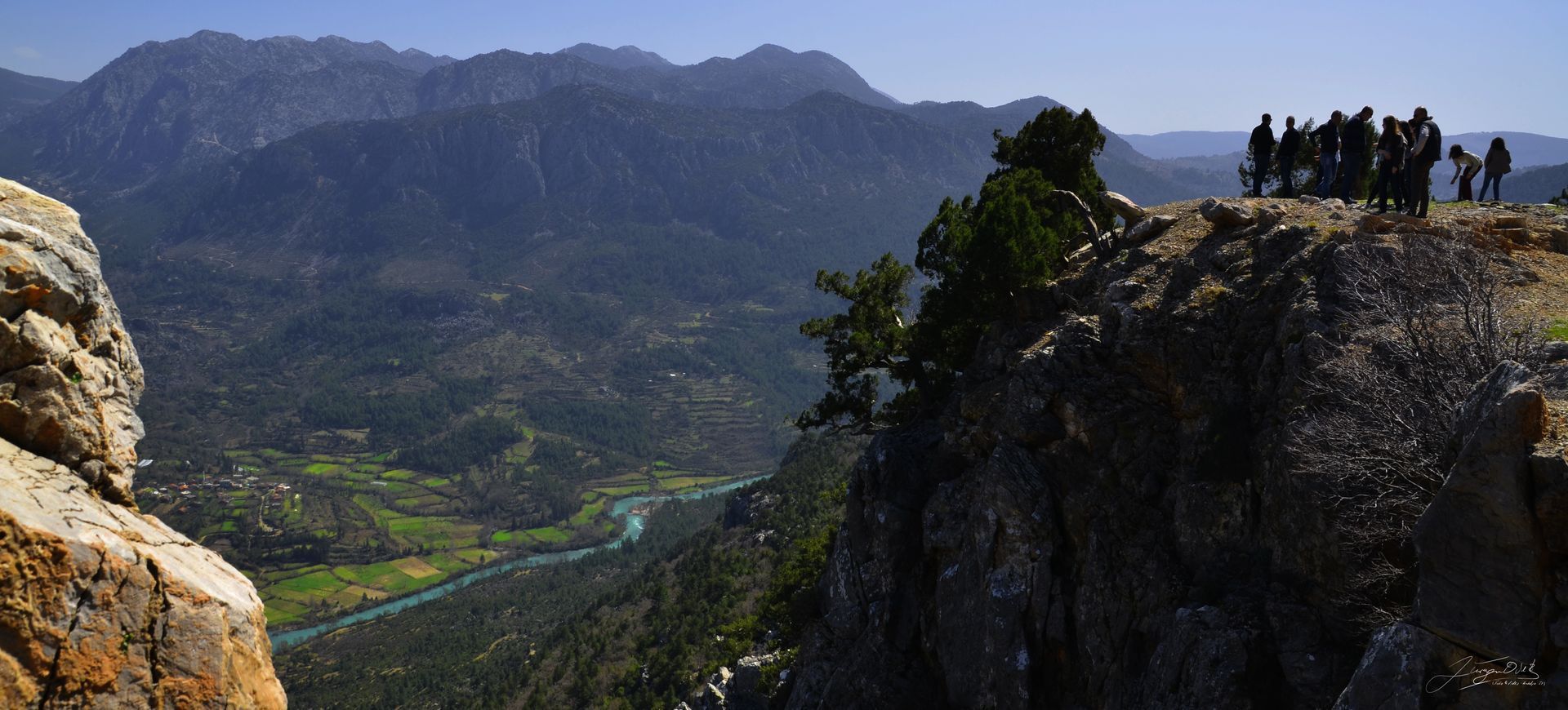
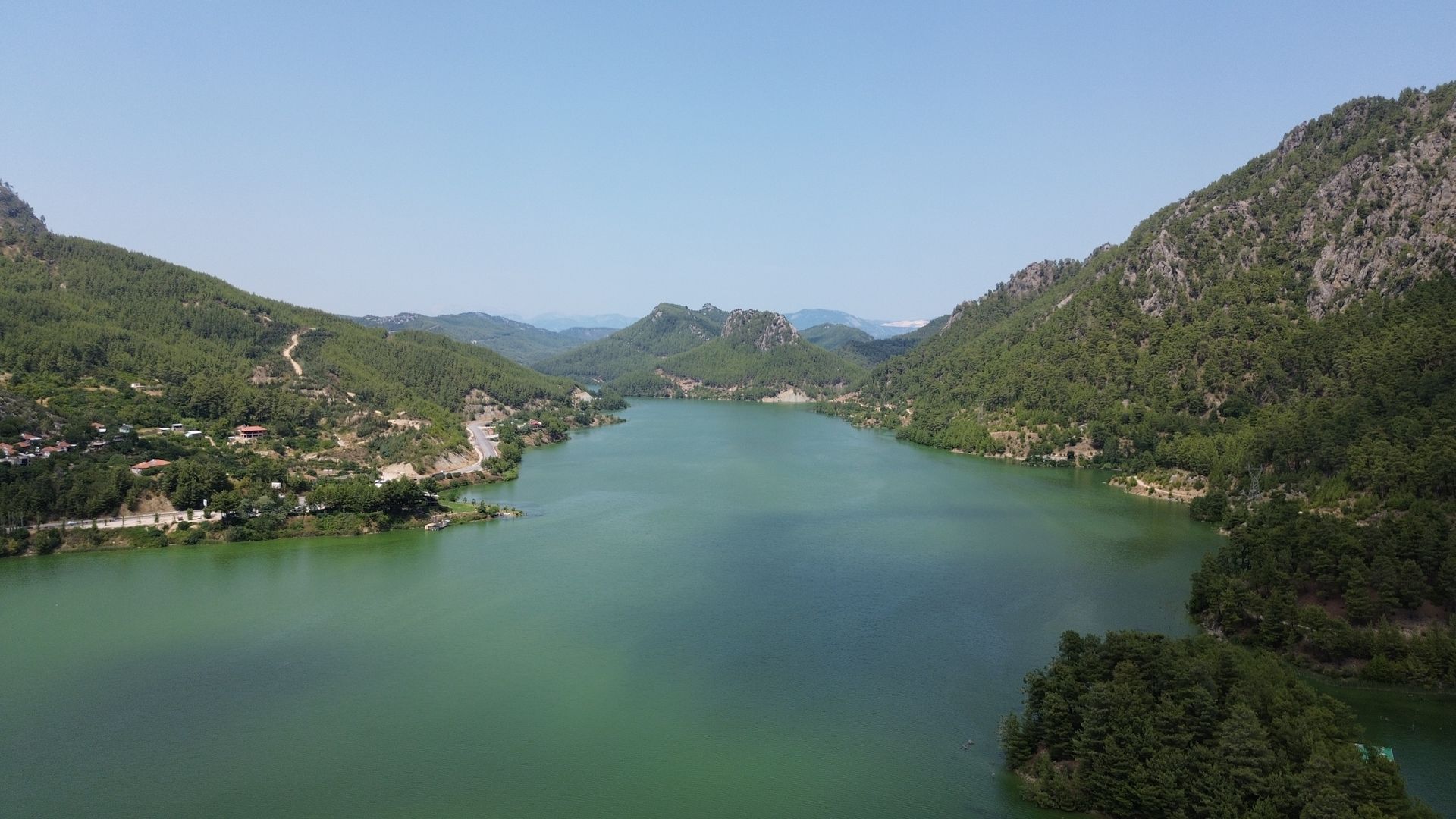
Located in the western Taurus Mountains, Köprülü Canyon National Park is one of the most striking natural landscapes in southern Türkiye. While often associated with rafting, the national park represents a far broader story — one shaped by deep canyons, ancient mountain cities, and centuries of human interaction with water and stone.
As highlighted in our Antalya Travel Guide, the region’s geography has always played a defining role in shaping life, movement, and culture. Köprülü Canyon stands as one of the clearest examples of this relationship.
Where Is Köprülü Canyon National Park?
Köprülü Canyon National Park lies approximately 90 kilometers northeast of Antalya, following the course of the Köprüçay River as it cuts through limestone terrain.
Declared a national park in 1973, the protected area spans more than 360 square kilometers and includes:
- Steep canyon walls rising hundreds of meters
- Ancient forests of cedar, cypress, and pine
- Mountain villages shaped by Yörük traditions
- Historic bridges and remnants of ancient routes
Its relative isolation has allowed both natural ecosystems and archaeological traces to survive with minimal disruption.
The Power of Water: Köprüçay River and the Canyon Landscape
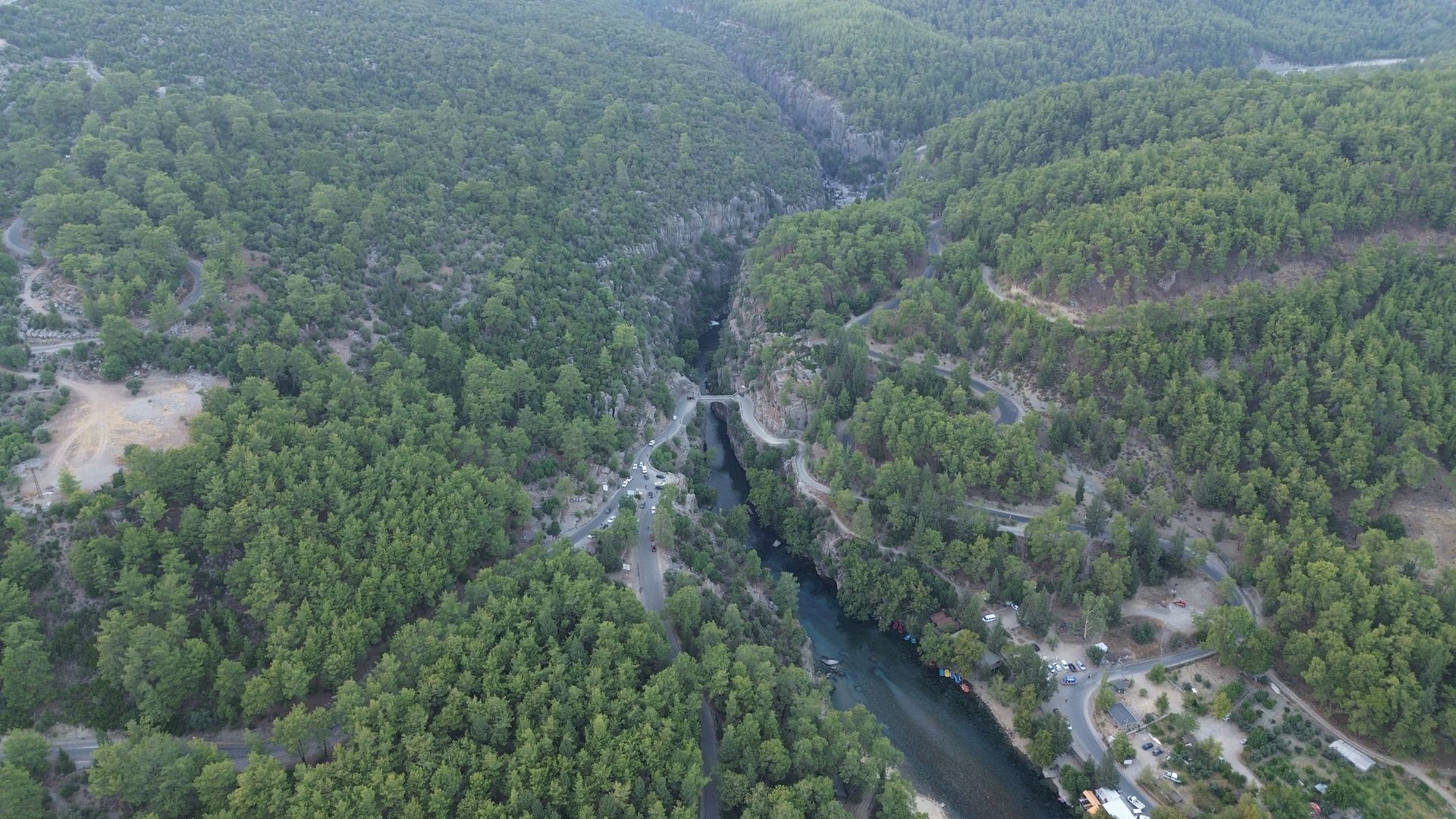
The Köprüçay River originates from powerful underground springs in the Taurus Mountains. Over thousands of years, its flow has carved the dramatic limestone canyon that defines the park today.
Narrow gorges, vertical rock faces, and wide riverbeds coexist within a short distance, creating a constantly shifting landscape. Seasonal changes in water levels dramatically alter the canyon’s appearance, reinforcing the idea that Köprülü Canyon is not a static monument, but a living geological system.
Tazı Canyon: The Canyon Above the Canyon
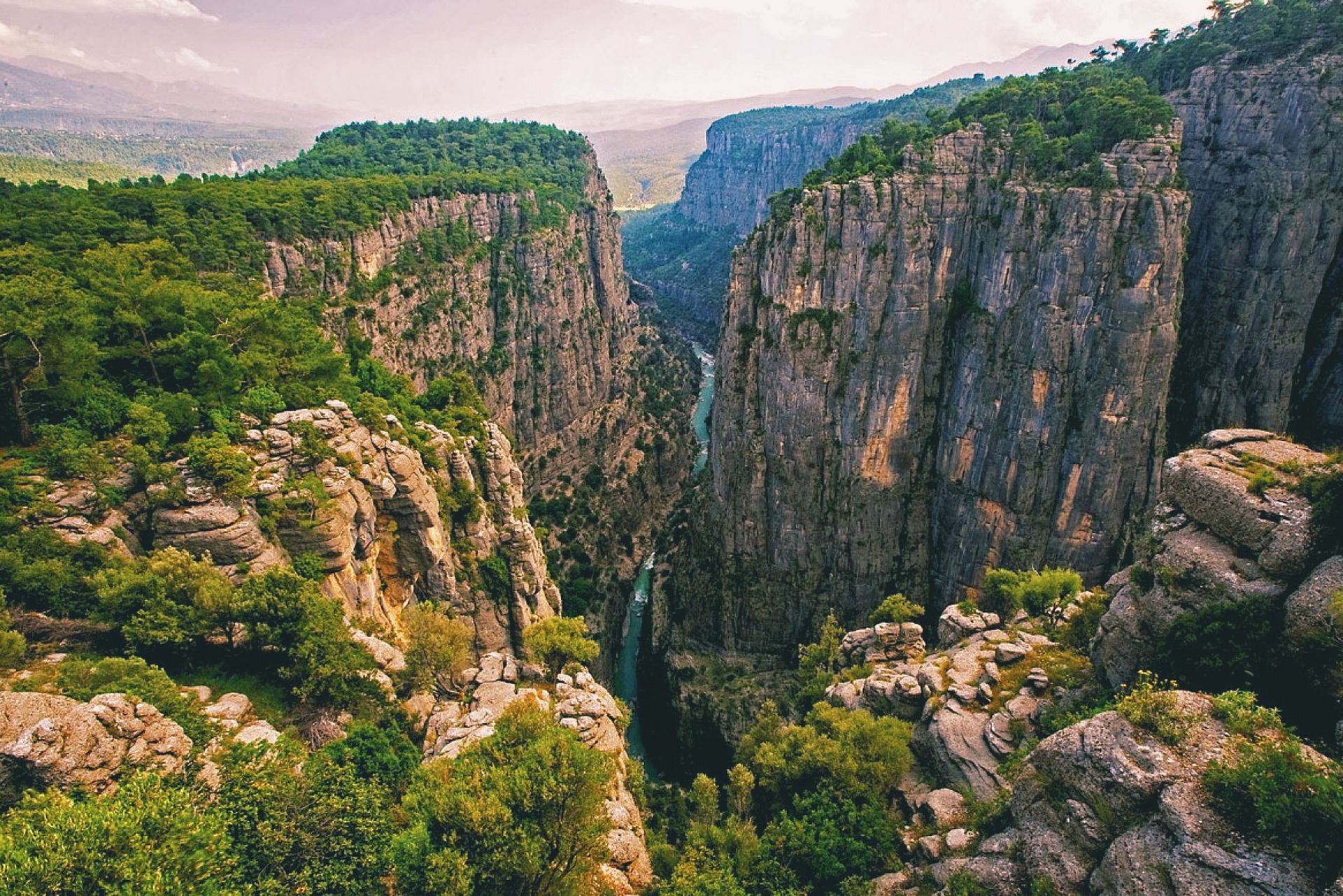
One of the most dramatic viewpoints in the region is Tazı Canyon, often referred to as the “Eagle Canyon.” Located within the greater Köprülü Canyon system, Tazı Canyon offers a vertical perspective over the deep gorge carved by the Köprüçay River.
From its high cliffs, visitors gain a clear understanding of the scale and power of the landscape. The canyon’s sharp edges, layered rock formations, and vast depth reflect the geological forces that shaped the entire national park. Unlike river-level experiences, Tazı Canyon emphasizes height, silence, and exposure — revealing a different dimension of Köprülü Canyon’s natural character.
Selge Ancient City and the Mountain Routes
Hidden within the mountains above the canyon lies Selge, an ancient Pisidian city that once controlled key inland routes connecting the Mediterranean coast to Anatolia’s interior.
Selge’s ruins — including a well-preserved theater, city walls, and public structures — demonstrate how human settlement adapted to rugged terrain. Its strategic position above the canyon highlights the historical importance of Köprülü Canyon as more than a natural barrier; it was also a corridor of movement, trade, and communication.
As explored in the Ancient Cities section of our Antalya Travel Guide, sites like Selge reveal how mountain landscapes were not avoided, but actively integrated into ancient urban planning.
Adam Kayalar: Sculpted by Time and Nature
Scattered throughout the canyon landscape are striking rock formations locally known as Adam Kayalar — “the Man Rocks.” Shaped by erosion, wind, and water, these formations resemble human silhouettes standing along ridges and valley edges.
Beyond their visual impact, Adam Kayalar reflect the slow, patient forces that have shaped Köprülü Canyon over millennia. Their presence reinforces the sense that this landscape is defined not only by dramatic events, but by continuous transformation.
Oluk Bridge: Crossing the Canyon Through Time
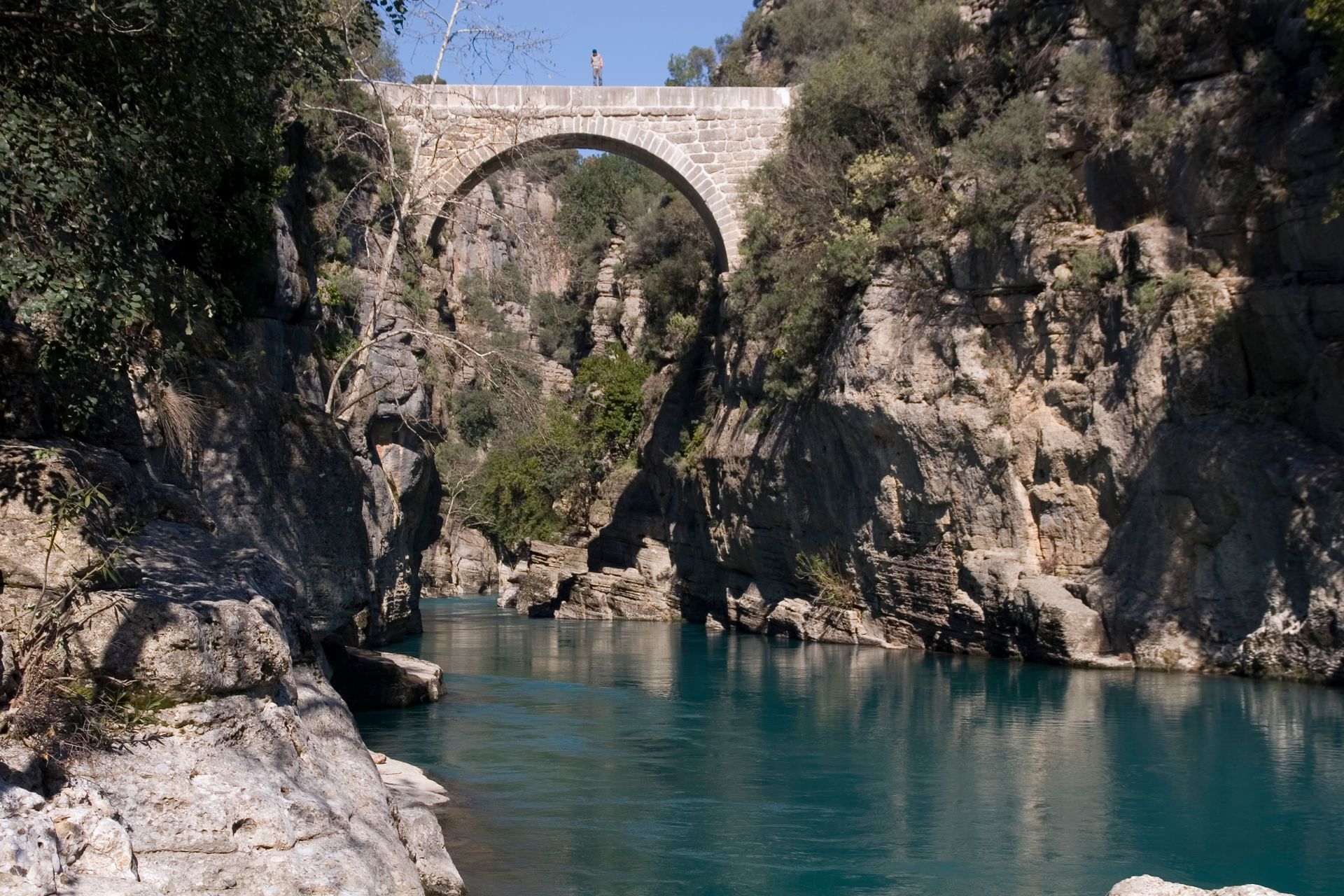
Among the most remarkable human-made structures in the park is Oluk Bridge, a Roman-era stone bridge spanning the Köprüçay River.
Built to connect ancient routes across the canyon, Oluk Bridge demonstrates advanced Roman engineering adapted to challenging topography. Its narrow arch and durable construction allowed people, animals, and goods to cross the river safely, integrating the canyon into wider regional networks.
The bridge’s continued presence today illustrates a broader theme seen throughout Antalya: structures were not abandoned with the passing of empires, but absorbed into evolving landscapes and patterns of use.
Beyond Rafting: Experiencing the Park Slowly
While rafting remains a popular activity, Köprülü Canyon offers many quieter ways to engage with its environment:
- Walking along ancient paths near Selge
- Exploring canyon viewpoints such as Tazı Canyon
- Observing geological formations and river dynamics
- Visiting villages shaped by mountain life
These slower experiences align closely with the broader philosophy outlined in our Antalya Travel Guide — discovering places through context rather than consumption.
Local Life Around the Canyon
Villages surrounding Köprülü Canyon continue to reflect traditions influenced by Yörük culture. Seasonal movement to higher plateaus, small-scale agriculture, and a close relationship with the land remain part of daily life.
Hospitality here is functional and sincere, shaped by geography rather than tourism trends, offering insight into a way of life rooted in adaptation and continuity.
Blog